Start of the Day
6:30 AM
I slept in until 6:30am. I got some coffee and finished my left over chipolte bowl.
Morning Reflections
8:00 AM
During this group we went through Rose, Thorn, Bud.
- Rose – something positive
- Thorn – a struggle or obstacle
- Bud – oppurtunitty for growth
Yoga
9:00 AM
I thought doing yoga was stupid… but I am giving this program 100% so I tried it. I actually really enjoyed it and the instructor modifies the stretches for everyone.
Second Appt. with Therapist Dan
10:00 AM
I had my second appointment with Dan as part of my intake process. These meetings are exhausting but at the end of this meeting I received my official diagnosis. I was given the option if I wanted to know them or not as it would not change my treatment plan. I thought it would be helpful to know.
- Severe Post Traumatic Stress Disorder
- Severe Insomnia
- Moderate Depression
- Moderate Anexity
There is a possible 5th diagnosis that he is still considering called Dysthymia
Recovery Principles
11:00 AM
In this session we discussed Core Recovery Principles for Substance User Disorder
- Honesty & Accountability
- Willingness & Open-Mindedness
- Self-Awareness
- Emotional Regulation & Copy Skills
- Connection & Support
- Structure & Routine
- Relapse Prevention & Safety Planning
- Holistic Wellness
Lunch Time
12:00 PM
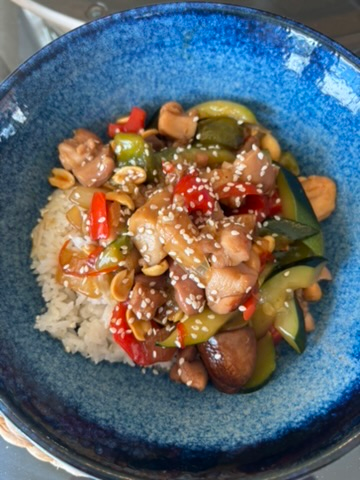
Chef Curtiss made a Thai Chicken and Basil Curry bowls.

Creative Expressions
1:00 PM
In this session we talked about victim mentality and its influence on substance use disorder and recovery.
- Defining the victim mentality
- Recognizing the symptoms of victim mentality and thought patterns that accompany them
- Locus of Control in Recovery
- Strategies for healthier coping and rewrite your story
Life Skills in Recovery
4:00 PM
In the meeting we went over the disease model. We talked about our feelings on AA with our counselor. Myself and others feel that AA seems like a cult, especially with the older crowds.
We received a letter from our addiction along with a list of prompt questions to work through due at tomorrow’s 4pm meeting.
Dear Friend,
I have come to visit once again. I love to see you suffer mentally, physically, spiritually, and socially. I want to make you restless so you can never relax. I want to make you jumpy, nervous, and anxious. I want to make you agitated and irritable so everything and everybody makes you uncomfortable.
I want you to be confused and depressed, so that you can’t think clearly and positively. I want you to feel guilty and remorseful for the things you have done in the past and you’ll never be able to let go of. I want to make you angry and hateful toward the world for the way it is and the way you are. I want you to feel sorry for yourself and blame everything but me for the way things are. I want you to be deceitful and untrustworthy and to manipulate and con as many people as possible. I want to make you feel fearful and paranoid for no reason at all. I want to make you wake up all hours of the night screaming for me. You know you can’t sleep without me, I’m even in your dreams. I want to be the first thing you think about every morning and the last thing you think about before you black-out.
I’d rather kill you, but I’d be happy enough to put you back in the hospital, another institution, or jail. But you know that I’ll be waiting for you when you get out. I love to watch you slowly go insane. I can’t help but sneer and chuckle when you shiver and shake; when you freeze and sweat at the same time; when you wake up with
Yes, it’s amazing how much destruction I can be to your internal organs while at the same time working on your brain, destroying it
I deeply appreciate how much you are sacrificing for me. The countless good jobs you have given up for me; all the friends that you deeply cared for, you gave up for me.
And wha
But do not despair, my friend, for on me you can always depend.
Forever Yours,
Your Addict
Dinner Time
5:30 PM
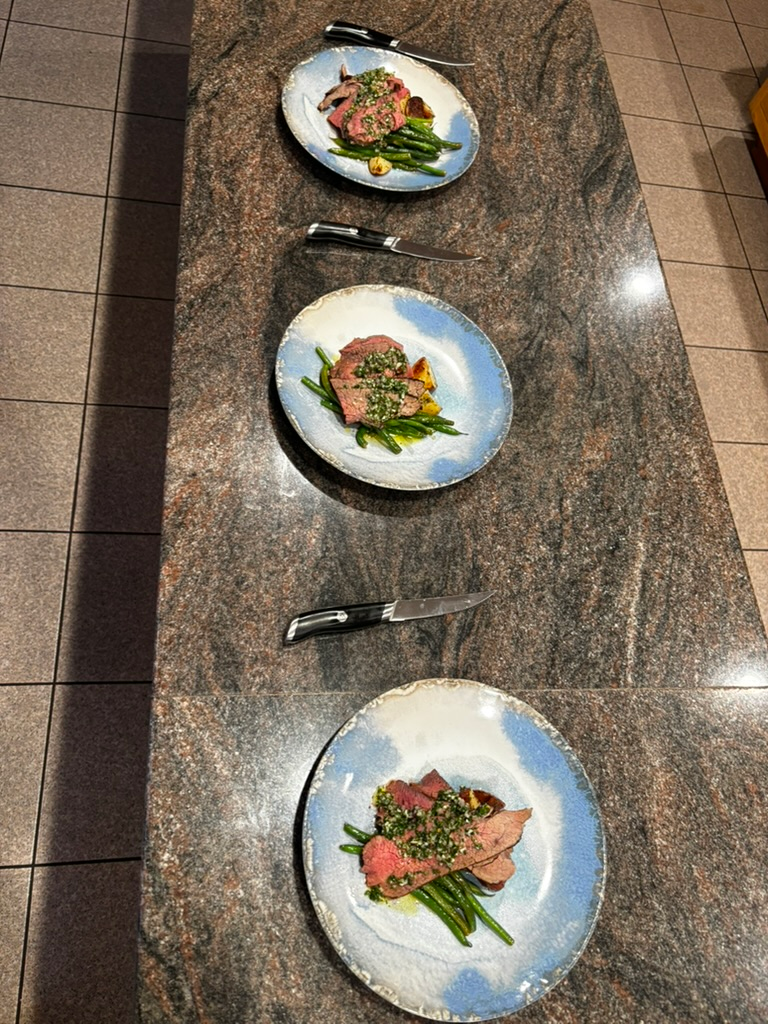
Chef Curtiss made an awesome lasagna. The secrete was a little cumin in the meat sauce. We all dove into it too fast for any of us to get a photo of it.
Recovery Dharma Meeting
7:00 PM
Drove down to University Heights for a Recovery Dharma meeting at the Dharma Bums Budist Temple. We took our shoes off before entering the Temple.
The meeting started with a reading from the Recovery Dharma book. Tonight’s reading was on the Second Noble Truth: The Cause of Suffering (reading is below the image). This was followed by a 20 minute guided meditation. Although based on Budist principles, the Recovery Dharma program is not religious. You can learn more at https://recoverydharma.org/.
Following the meditation anyone who wanted to speak had the chance to talk about their journey or struggles.

THE SECOND NOBLE TRUTH:
The Cause of Suffering
As people who have become dependent on substances and behaviors, we’ve all experienced the sense of failure and hopelessness that comes from trying, and failing, to let go of our fixations. Addiction itself increases our suffering by creating a hope that both pleasure and escape can be permanent. We go through this suffering again and again because substances or behaviors can only give us temporary relief to our pain, our unhappiness, and our lost or damaged sense of self.
Our refusal to accept the way things are leads to wanting, or craving, which is the cause of suffering. This excludes discrimination-based suffering and harm which do not need to be “accepted” but met with wise boundaries, wise action, and compassion. We don’t suffer because of the way things are, but because we want — or think we “need” — those things to be different. We suffer because we cling to the idea that we can satisfy our own cravings, while ignoring the true nature of the world around us. Above all, we cling to the idea that we can hold on to impermanent and unreliable things, things that can’t ever lead to real satisfaction or lasting happiness, without experiencing the suffering of one day losing them.
Clinging to impermanent solutions for suffering results in craving. We experience craving like a thirst, an unsatisfied longing, and it can become a driving force in our lives. If craving goes beyond simple desire, which is a natural part of life, it often leads us to fixation, obsession, and the delusional belief that we can’t be happy without getting what we crave. It warps our intentions so that we make choices that harm ourselves and others. This repetitive craving and obsessive drive to satisfy it leads to what we now know as addiction. Addiction occupies the part of our mind that chooses — our will — and replaces compassion, kindness, generosity, honesty, and other intentions that might have been there. Many of us experience addiction as the loss of our freedom to choose; it’s the addiction that seems to be making our choices for us.
In the way we “must have” food, shelter, or water, our mind can tell us we “must have” some substance, buy or steal something, satisfy some lust, keep acting until we achieve some “needed” result; that we must protect ourselves at all cost and attack people with whom we disagree, or people who have something we want. This “need” also leads to an unsettled or agitated state of mind that tells us we’ll only be happy if we get certain results or feel a certain way. We want to be someone we’re not, or we don’t want to be who we are.
Conditions or circumstances in and of themselves don’t cause suffering. They can cause pain or unpleasant experiences, but we add suffering on top of this when we think we “need” those circumstances to be different. We create even more suffering when we act out in ways that deny the reality of the circumstances and the reality of impermanence. Craving is the underlying motive that fuels unwise actions that create suffering
Read the full free pdf copy of the book here: Recovery Dharma 2.0
0 Comments