Day 5: Beach and Visitors

Sunday, Feb 8, 26

Wake Up and Breakfast

4:00 AM

Despite the copious amount of drugs they have me on including 2 tramadol, Vistaril, Gabapentin and Valium before bedtime, I had trouble going the sleep and was wide awake at just before 4am. I read for an hour in bed and worked on getting caught up on my blog from the first few days I wasn’t allowed to have any electronics. 

First Visitor - Mom

9:00 AM

Today was the first day I was able to have visitors.  Visitation is only on Saturday and Sundays at 9am and 3pm for 1 hour. We walked around the facility and hung out in the zen garden.  She also brought me a swimsuit and flip-flops because we had a beach trip planned for after lunch but that ended up being canceled.  

Crown Point Shores AA

11:00 AM

This morning we headed down to Pacific Beach for the CROWN POINT SHORES HAPPY JOYOUS AND FREE AA meeting. I was very adamant against AA. The previous session so far have been via Zoom and mostly with old people.  It seemed like a cult the way people talked about it – even after being sober for 25 years.  

The Crown Point Shores session was on the grassy area by the bay and full of younger folks. Overall, it was a good meeting and it was nice to get some fresh air and sun by the bay. 

I was also feeling brave and went up and received my first AA chip.

Lunch Time

12:00 PM

The chef was out sick today, so we stopped by Jersey Mikes on the way back to Villa.  

Trip to the Convience Store

2:00 PM

We had plans to take a trip to the beach today. One of the 3 other people in the facility is from the NYC and wanted to see the beaches out here.  Unfortunately it was a busy Sunday already with visitors, morning AA meetings and another client had meetings with the next program they are going into as well.  We are hoping for the beach trip next Saturday.  I picked up some diet cokes mixers (mixers since there is no Jack Daniels). This chef keeps the fridge stocked with all kinds of drinks (all sugar free) and is going to start stocking diet cokes for me. 

Second Visitor - Tyler

3:00 PM

Tyler arrived earlier than expected. We had pushed back visitation to 3:30pm to allow more time at the beach. But since that was canceled, we could have our visitors come at 3 or 3:30. Tyler showed up at 2:45pm and the staff didn’t mind giving us a little more time to visit. I gave a tour of the mansion (minus upstairs as that is only for clients)  and the various areas of the property. We found a safe, inclosed patio area so that Princess Raisin can come visit next weekend. I had got enough diet cokes are the store for Tyler and I to drink during while we got caught up on our show. Our goal was to watch the latest episode of The Traitors, but we ended up spending a lot of the time talking.   

Piano Time

4:00 PM

It has been a while since I felt like playing the piano. I had ordered some headphones on amazon that worked with this piano and they arrived this afternoon.  I grabbed my iPad with my sheet music on it and played until dinner time. 

Dinner

5:30 PM

The 4 of us had request fried chicken for dinner and it was delicous. 

Reflection / Recovery Meeting

6:30 PM

Tonight we watch the movie 28 Days in the theater.

28 Days (2000) is a comedy-drama film starring Sandra Bullock as Gwen Cummings, a hard-partying New York journalist who is forced into a 28-day rehabilitation program after a DUI incident, where she reluctantly confronts her substance abuse issues with the help of fellow patients and a counselor. The film follows her hilarious and touching journey as she learns to deal with her addiction and rebuild her life.

Building Support Systems

This mornings discussion was based on the article below and how we build a success support system and what that looks likes.

How to help your potential support system really be helpful
~Josh King, PsyD, Center for Motivation and Change

Many people start using substances (often as teens) as a way to engage socially.  The reality is that almost all substances with abuse potential initially have a “social lubrication” effect (i.e., they are dis-inhibiting, relaxing, anxiety-reducing, buffers to self-criticism, enhancers of pleasure, etc).  The problem?  Further down the road (and sometimes right out of the gates), use patterns become much more solitary, withdrawn and isolated.  Many have suffered through conflicts with family and friends and, by the time they seek treatment, feel disconnected from potential supporters of change.  In addition, to break the destructive patterns that are in place when they seek treatment, they have to distance themselves from current friends who engage in the same behavior (party pals etc).  The reality of “loss”…that is the loss of the relationship with the substance and with the people around it…and the awareness of distance from potentially supportive family and friends makes the early stages of change very hard to tolerate at times.

Research has shown time and again that having a robust support network can significantly reduce the odds of relapse (or the length of relapse should there be one).  So, to best achieve one’s recovery goals, it’s best to involve as many people as possible, even though it can feel like the exact opposite of what you want to do when you are first making significant life and behavioral changes.

Below are tips to on how to build your support team.

1.  Start by educating yourself and others about what you need
As we are sure you’ve noticed, there is a lot of information out there about substance abuse and treatment.  Some of it is helpful and some of it is simply not true.  For family and friends to understand what you’re going through, they need to learn more about substance abuse, about the types of treatment available, and about what you are doing and feeling!  It’s not always easy, but the first step is to have frank conversations about what you are going through and what you need to keep moving forward.  We also recommend pointing them to professional resources, like books, or websites run by professionals (like this one!) as it will add some credence to what you’re saying to them.

2.  Tell them HOW they can help; be brief and specific.
If you want something from someone, it best to ask for it specifically, or you are not likely to get what you want.  Same goes for support . . . ask specifically for what you want from someone else!  This requires you to think through what would be helpful BEFORE you have the conversation.  Don’t worry though; you can always change your request later with another conversation.

3.  Be patient with yourself and with them
Most people are awkward and intimidated when making changes in behavior.  And when you are trying to interact with people who have distanced themselves from you (due to fear, anger, frustration, or your withdrawal from them) there is often a history of difficult interactions.  Be patient with family and friends who want to be supportive but don’t have the skills yet to pull it off exactly in the way that you need or wish.  Just like you, they may need some time, and some guidance to get it right.

4.  Pick up the phone!
Now that you’ve asked for help, if someone calls (texts, emails, etc) to provide that support, respond to them!  Sometimes that may be easy, other times it may be very, very difficult.  The more you can push yourself to stay connected, the more you can benefit from their support.  What do you do if you are having a bad day, and just can’t bear to talk with anyone?  Text, email or call them back and say…”hey, thanks for reaching out.  I need the day to get my thoughts together…but I’ll call you tomorrow.”  Try not to avoid, disappear, or fail to respond to efforts to connect from others as doing so will only make you feel worse (“I just can’t get my act together and now they are even more upset with me”) and make them more upset and worried (“He asked me to check in and now he is not answering…something bad must be happening”).

5.  Positively reinforce them
If you like something that someone does and you want them to keep doing it, give them some positive feedback!  Saying “thank you, that was nice” or “I really appreciate the way you handled that” goes a long way towards making those behaviors re-occur.  Almost everyone likes to be noticed and likes positive feedback or a compliment.  People in general like to know when they are getting it right.

Do you have any other tips for bringing in family and friends?  What has worked for you in the past?

Lunch

Building Community

The team of the day has been about building building community and support systems. We watched this documentary (worth watching) and had group discussion afterwards. 


Stages of Change

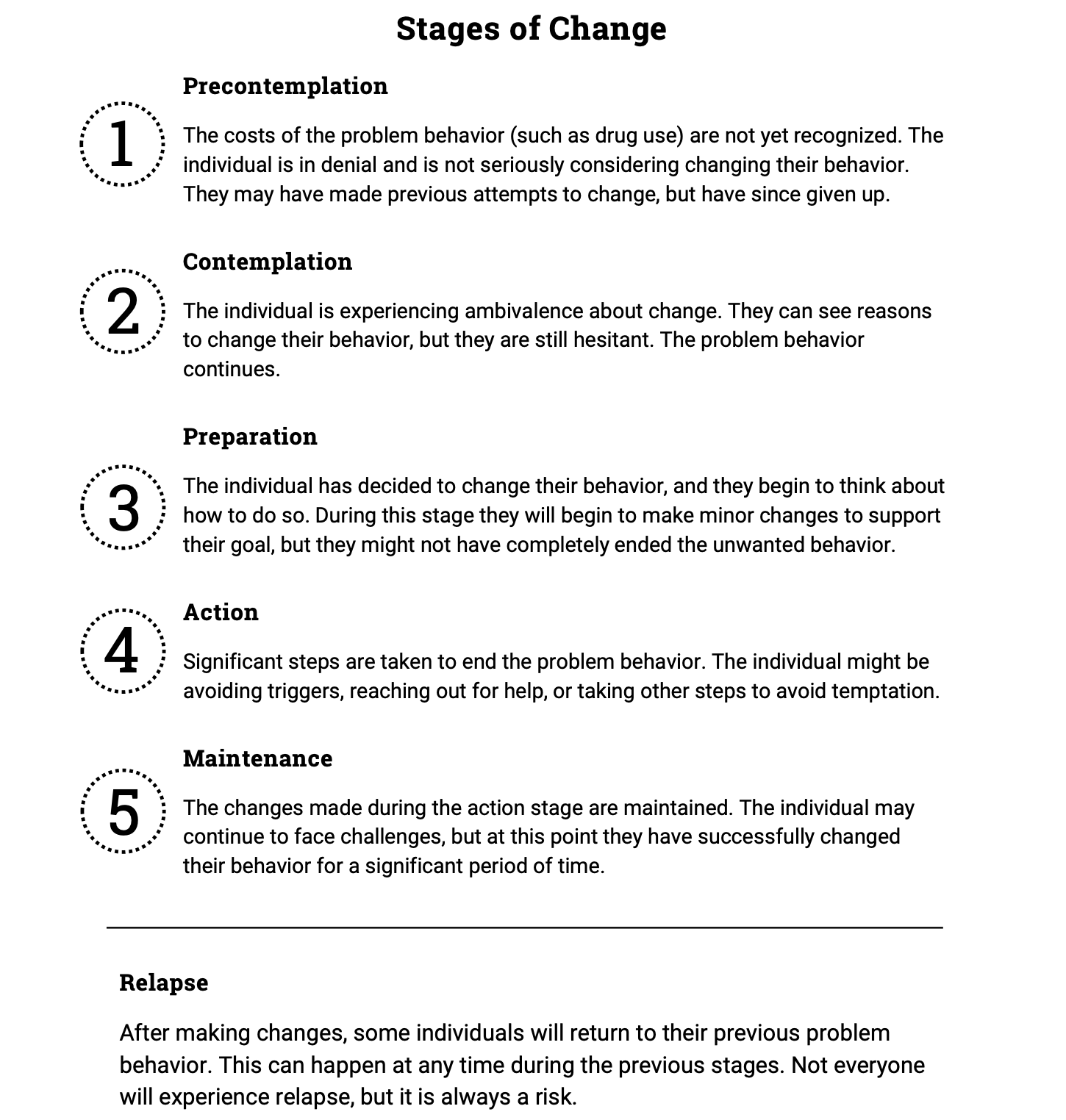
Later in the afternoon we worked through a Change Plan Worksheet and had group discussion on the stages of change. 

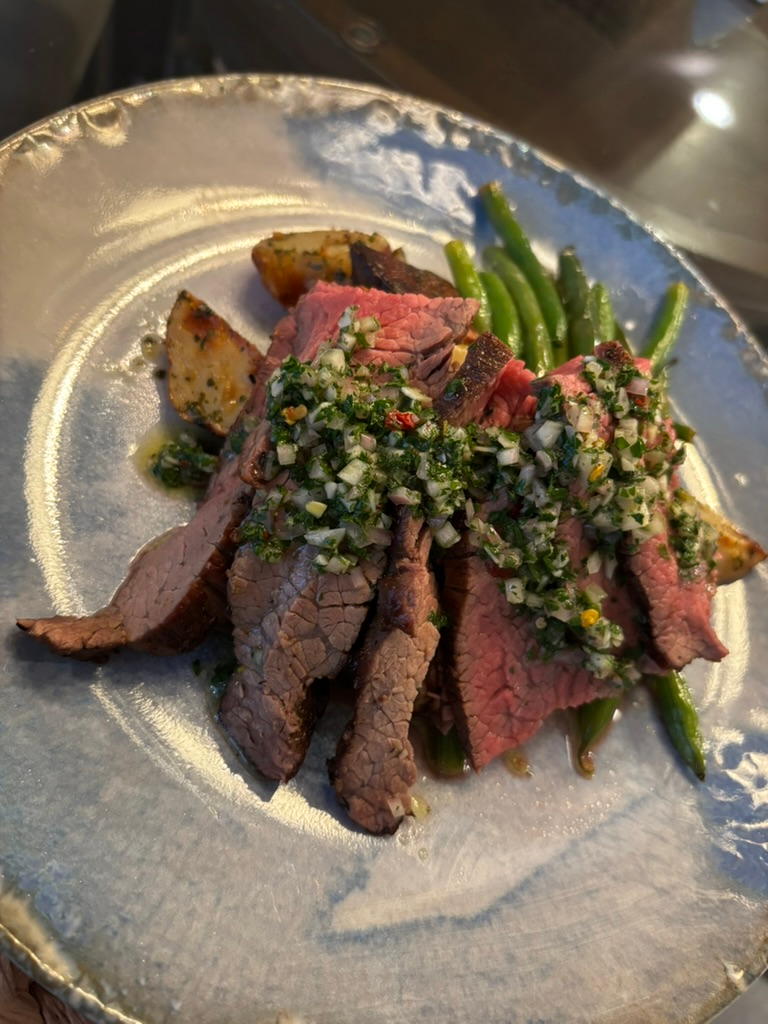
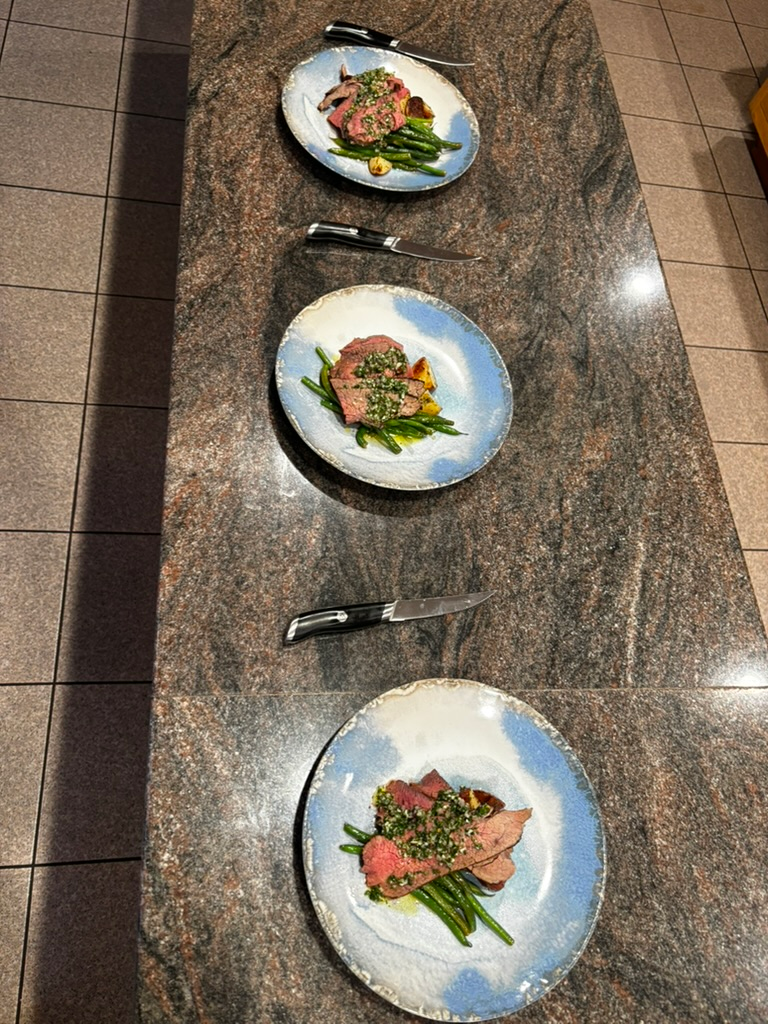
Steak Dinner!

Village Community Church AA Meeting

We ended the day with an AA meeting at the Village Community Church down the street from the house.  Tonight was also a book study meeting. Got to see some people that have already left the house.  

0 Comments