Day 7: Cognitive Distortions

Tuesday, Feb 10, 26

TL;DR

The new medications worked great. I fell right asleep last night and didn’t wake up throughout the night or have night terrors.  Went to the gym and sauna before breakfast.  Throughout the day we worked on hacking “feel good” hormone, talked about cognitive distortions, and patience & tolerance. This morning was my last valium for detox and was shaky and feeling suick again by 2pm. I was given Vistaril and Zofran to ease the symptoms. 

Also… Its extremely busy and I work on the blogs after night time medications, so I am not proof reading this shit. There will be lots of typos and errors. 

Start of the Morning

6:00 AM

I got amazing sleep! I didn’t wake up throughout the night or have night terrors.  I woke up full of energy at 6am. I went down stairs to the gym and spent 30 minutes on the treadmill for 30 minutes and an incline of 5 and speed of 4.  After getting a little cardio in, I fired up the sauna and got about 20 minutes in there. 

I am really liking the Just Crack Egg microwavable scrambles.  I added 2 eggs and added some extra cook time.  

Morning Reflections

8:00 AM

This morning’s reflection was on mindful self-compassion from Buddhism & the Twelve Steps Daily Reflections: Thoughts on Dharma and Recovery.  We worked on self affirmations and ended the meeting with a stress relief medidation.


Health and Wellness

9:00 AM

During this session we focused on the group of “feel good hormones” such as dopamine, serotonin, endorphins, and oxytocin. We talked about how they are produced and the impact they have.  We learned how to “hack” these neurotransmitters from what we eat to a list of activites to help increase happiness brain chemicals. 

Principles of Recovery

11:00 AM

Therapist Dan lead a session on Dysfunctional Thoughts and Cognitive Distortion. By using the thought log, you can begin to analyze patterns and triggers. 

Lunch Time

12:00 PM

Board and Brew sandwich for lunch.  

Creative Expressions

1:00 PM

During this session we watched Netflix’s The Mind, Explained season 1, episode 3: Anxiety and episode 4: Mindfulness  

Life Skills in Recovery

4:00 PM

This session focused on patience and tolerance, both externally and within yourself. 

Dinner

5:30 PM

Mendocino Farms

Reflection / Recovery Meeting

8:00 PM

Tonight we watched a recovery movie. That is when we watched a movie that has a theme around addiction and then we have a group discussion after the movie. Tonight we all choose Beautiful Boy during dinner while googling different movies.
 

Summary

Beautiful Boy is a devastatingly honest look at a family being pulled apart by addiction, centered on the relationship between a father, David, and his son, Nic. Instead of a straightforward “just say no” story, it captures the brutal, repetitive cycle of recovery and relapse, showing how meth addiction can turn a brilliant, sweet kid into someone his own parents barely recognize. It’s essentially a story about a father’s desperate realization that no matter how much he loves his son or how hard he tries to “solve” the problem, he can’t control the disease. It’s raw, it’s frustrating, and it’s a total tear-jerker that focuses more on the emotional toll on the family than the drugs themselves.

Evening Time

9:00 PM

My mobile scanner arrived this afternoon. I spent the evening scanning all the handouts and organizing them inside my google drive. I have added shared links (via the blue buttons) to some of these documents through out some of the sections of the blog. 

Building Support Systems

This mornings discussion was based on the article below and how we build a success support system and what that looks likes.

How to help your potential support system really be helpful
~Josh King, PsyD, Center for Motivation and Change

Many people start using substances (often as teens) as a way to engage socially.  The reality is that almost all substances with abuse potential initially have a “social lubrication” effect (i.e., they are dis-inhibiting, relaxing, anxiety-reducing, buffers to self-criticism, enhancers of pleasure, etc).  The problem?  Further down the road (and sometimes right out of the gates), use patterns become much more solitary, withdrawn and isolated.  Many have suffered through conflicts with family and friends and, by the time they seek treatment, feel disconnected from potential supporters of change.  In addition, to break the destructive patterns that are in place when they seek treatment, they have to distance themselves from current friends who engage in the same behavior (party pals etc).  The reality of “loss”…that is the loss of the relationship with the substance and with the people around it…and the awareness of distance from potentially supportive family and friends makes the early stages of change very hard to tolerate at times.

Research has shown time and again that having a robust support network can significantly reduce the odds of relapse (or the length of relapse should there be one).  So, to best achieve one’s recovery goals, it’s best to involve as many people as possible, even though it can feel like the exact opposite of what you want to do when you are first making significant life and behavioral changes.

Below are tips to on how to build your support team.

1.  Start by educating yourself and others about what you need
As we are sure you’ve noticed, there is a lot of information out there about substance abuse and treatment.  Some of it is helpful and some of it is simply not true.  For family and friends to understand what you’re going through, they need to learn more about substance abuse, about the types of treatment available, and about what you are doing and feeling!  It’s not always easy, but the first step is to have frank conversations about what you are going through and what you need to keep moving forward.  We also recommend pointing them to professional resources, like books, or websites run by professionals (like this one!) as it will add some credence to what you’re saying to them.

2.  Tell them HOW they can help; be brief and specific.
If you want something from someone, it best to ask for it specifically, or you are not likely to get what you want.  Same goes for support . . . ask specifically for what you want from someone else!  This requires you to think through what would be helpful BEFORE you have the conversation.  Don’t worry though; you can always change your request later with another conversation.

3.  Be patient with yourself and with them
Most people are awkward and intimidated when making changes in behavior.  And when you are trying to interact with people who have distanced themselves from you (due to fear, anger, frustration, or your withdrawal from them) there is often a history of difficult interactions.  Be patient with family and friends who want to be supportive but don’t have the skills yet to pull it off exactly in the way that you need or wish.  Just like you, they may need some time, and some guidance to get it right.

4.  Pick up the phone!
Now that you’ve asked for help, if someone calls (texts, emails, etc) to provide that support, respond to them!  Sometimes that may be easy, other times it may be very, very difficult.  The more you can push yourself to stay connected, the more you can benefit from their support.  What do you do if you are having a bad day, and just can’t bear to talk with anyone?  Text, email or call them back and say…”hey, thanks for reaching out.  I need the day to get my thoughts together…but I’ll call you tomorrow.”  Try not to avoid, disappear, or fail to respond to efforts to connect from others as doing so will only make you feel worse (“I just can’t get my act together and now they are even more upset with me”) and make them more upset and worried (“He asked me to check in and now he is not answering…something bad must be happening”).

5.  Positively reinforce them
If you like something that someone does and you want them to keep doing it, give them some positive feedback!  Saying “thank you, that was nice” or “I really appreciate the way you handled that” goes a long way towards making those behaviors re-occur.  Almost everyone likes to be noticed and likes positive feedback or a compliment.  People in general like to know when they are getting it right.

Do you have any other tips for bringing in family and friends?  What has worked for you in the past?

Lunch

Building Community

The team of the day has been about building building community and support systems. We watched this documentary (worth watching) and had group discussion afterwards. 


Stages of Change

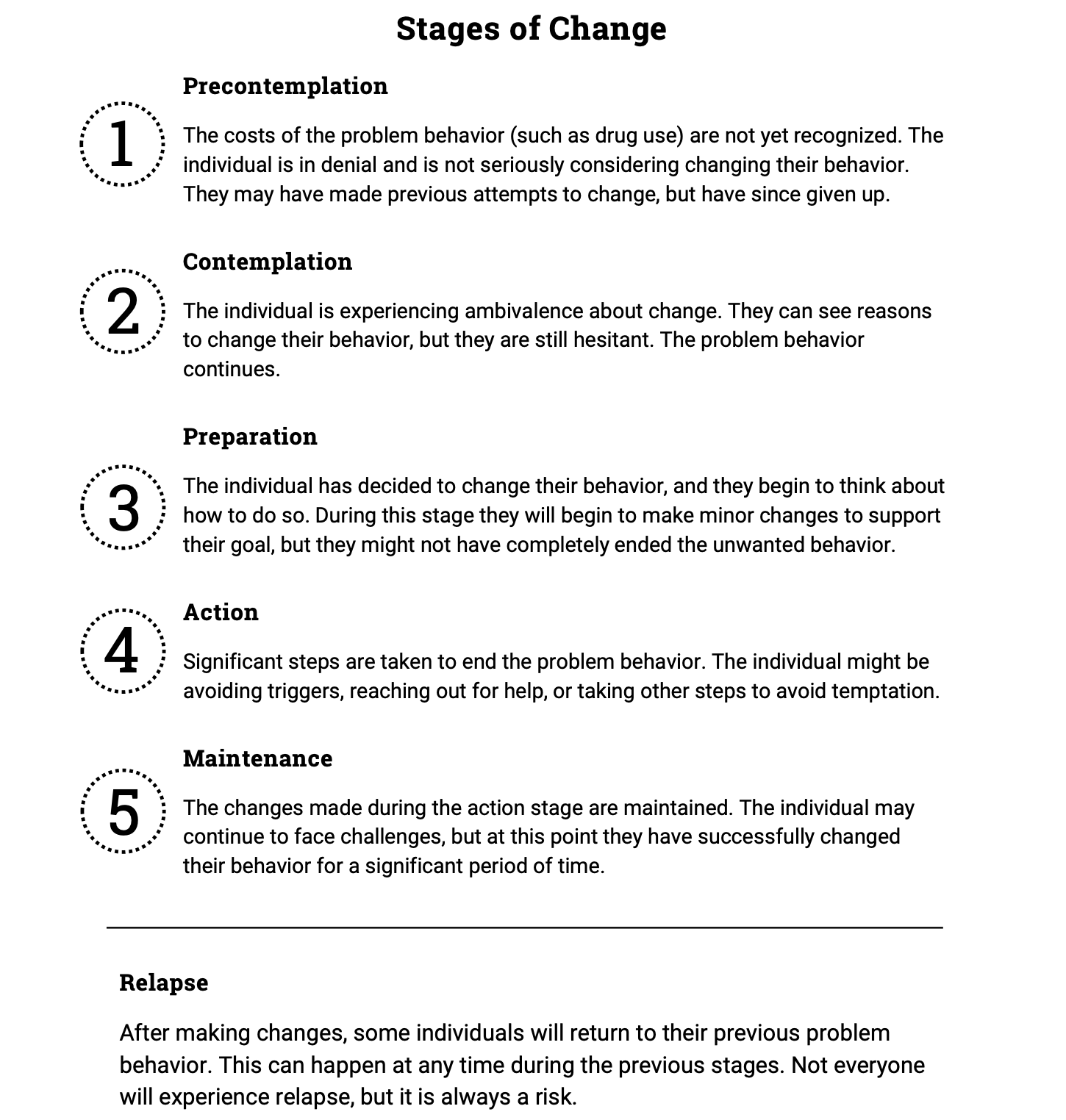
Later in the afternoon we worked through a Change Plan Worksheet and had group discussion on the stages of change. 

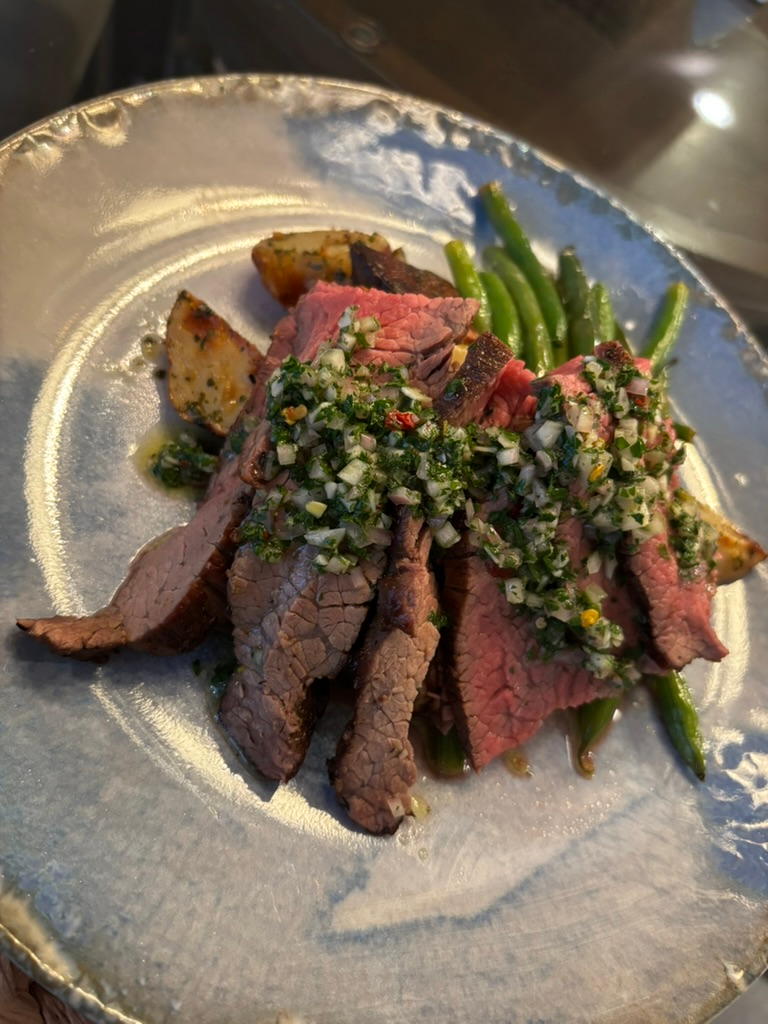
Steak Dinner!

Village Community Church AA Meeting

We ended the day with an AA meeting at the Village Community Church down the street from the house.  Tonight was also a book study meeting. Got to see some people that have already left the house.  

0 Comments