Day 9: The Anonymous People

Thursday, Feb 12, 26

TL;DR

I got 3 miles on the treadmill in the morning before my first meeting. Today is the last day for the other guy at the Villa. It’s exciting for him, but very sad for the rest of us; but we pan to keep in touch and meet up once I’m in PHP.  That brings it down to just 3 of us in the house. We watched the documentary called The Anonymous People ∫and played card game called Horrible Therapist – it is similar to cards against humanity.  My case manager has a tour setup for tomorrow with one PHP/SLE and was still working on getting a second tour setup with another facility. She is also working on insurance side with the programs. 

Start of the Morning

5:00 AM

I  slept great again and did 3 miles on the treadmill this morning.

Morning Reflections

8:00 AM

This morning we chipped out the guy that has finished the residential  program. 


Health & Wellness

9:00 AM

Today we watched the The Anonymous People (2013), directed by Greg Williams,. It is a landmark feature documentary that shifts the conversation about addiction from “the problem” to “the solution.” It focuses on the over 23 million Americans living in long-term recovery from alcohol and drug addiction who have traditionally remained hidden from public view.

The documentary serves as a rallying cry for a burgeoning grassroots movement known as the New Recovery Advocacy Movement. Its central arguments include:

  • The Problem of Silence: For decades, the public has only seen the “dysfunctional” side of addiction through sensationalized media. This film argues that because people in recovery stay anonymous, the public never sees the success stories, which perpetuates stigma.

  • Anonymity vs. Secrecy: The film explores the 12th Tradition of Alcoholics Anonymous (anonymity). It argues that while anonymity is vital for protecting newcomers at the meeting level, it has been misinterpreted as a mandate for public silence, preventing advocates from lobbying for better policy and funding.

  • Health Issue, Not a Moral Failing: By comparing addiction to other social health movements (like breast cancer or HIV/AIDS), the film advocates for treating addiction as a chronic, treatable medical condition rather than a criminal justice issue.

The documentary tracks the history of the recovery movement, highlighting:

  • Operation Understanding (1976): A groundbreaking event where 52 prominent citizens (including Dick Van Dyke) stood up and announced they were in recovery. 
  • Policy Impacts: It discusses how public advocacy led to the Mental Health Parity and Addiction Equity Act of 2008, which reduced insurance discrimination against those seeking treatment.

Recovery Principles

11:00 AM

We played Horrible Therapist with a few of the counselor. It was hilarious. 

Lunch Time

12:00 PM

For lunch we had chicken torilla soup. It was amazing and the broth was made from the chicken carcasses from a previous chicken dish and the chef simmered the stock over night.   

Creative Expressions

1:00 PM

We finished the documentary and had a group discussion.

Life Skills in Recovery

4:00 PM

We had a new counselor today and this was a lecture/discussion on Maslow’s Hierarchy of Needs. 

Dinner

5:30 PM

Today is the last night for the other guy at the Villa and he requested street tacos for dinner. 

Reflection / Recovery Meeting

7:30 PM

We wanted to do a Zoom AA meeting today so we could have more free time to spend with the guy that is leaving. Every night there is a San Diego AA zoom meeting called Easy Does It. It’s mostly old people trying to figure out how to mute and unmute on zoom or people that are there because of a court order mandate to attend so many AA meetings.  One guy starting doing the nazi salute, praising Hilter and screaming to kill all the jews. The host booted him from the meeting.  

Evening Time

8:00 PM

We all spent some time haning out together. 

Building Support Systems

This mornings discussion was based on the article below and how we build a success support system and what that looks likes.

How to help your potential support system really be helpful
~Josh King, PsyD, Center for Motivation and Change

Many people start using substances (often as teens) as a way to engage socially.  The reality is that almost all substances with abuse potential initially have a “social lubrication” effect (i.e., they are dis-inhibiting, relaxing, anxiety-reducing, buffers to self-criticism, enhancers of pleasure, etc).  The problem?  Further down the road (and sometimes right out of the gates), use patterns become much more solitary, withdrawn and isolated.  Many have suffered through conflicts with family and friends and, by the time they seek treatment, feel disconnected from potential supporters of change.  In addition, to break the destructive patterns that are in place when they seek treatment, they have to distance themselves from current friends who engage in the same behavior (party pals etc).  The reality of “loss”…that is the loss of the relationship with the substance and with the people around it…and the awareness of distance from potentially supportive family and friends makes the early stages of change very hard to tolerate at times.

Research has shown time and again that having a robust support network can significantly reduce the odds of relapse (or the length of relapse should there be one).  So, to best achieve one’s recovery goals, it’s best to involve as many people as possible, even though it can feel like the exact opposite of what you want to do when you are first making significant life and behavioral changes.

Below are tips to on how to build your support team.

1.  Start by educating yourself and others about what you need
As we are sure you’ve noticed, there is a lot of information out there about substance abuse and treatment.  Some of it is helpful and some of it is simply not true.  For family and friends to understand what you’re going through, they need to learn more about substance abuse, about the types of treatment available, and about what you are doing and feeling!  It’s not always easy, but the first step is to have frank conversations about what you are going through and what you need to keep moving forward.  We also recommend pointing them to professional resources, like books, or websites run by professionals (like this one!) as it will add some credence to what you’re saying to them.

2.  Tell them HOW they can help; be brief and specific.
If you want something from someone, it best to ask for it specifically, or you are not likely to get what you want.  Same goes for support . . . ask specifically for what you want from someone else!  This requires you to think through what would be helpful BEFORE you have the conversation.  Don’t worry though; you can always change your request later with another conversation.

3.  Be patient with yourself and with them
Most people are awkward and intimidated when making changes in behavior.  And when you are trying to interact with people who have distanced themselves from you (due to fear, anger, frustration, or your withdrawal from them) there is often a history of difficult interactions.  Be patient with family and friends who want to be supportive but don’t have the skills yet to pull it off exactly in the way that you need or wish.  Just like you, they may need some time, and some guidance to get it right.

4.  Pick up the phone!
Now that you’ve asked for help, if someone calls (texts, emails, etc) to provide that support, respond to them!  Sometimes that may be easy, other times it may be very, very difficult.  The more you can push yourself to stay connected, the more you can benefit from their support.  What do you do if you are having a bad day, and just can’t bear to talk with anyone?  Text, email or call them back and say…”hey, thanks for reaching out.  I need the day to get my thoughts together…but I’ll call you tomorrow.”  Try not to avoid, disappear, or fail to respond to efforts to connect from others as doing so will only make you feel worse (“I just can’t get my act together and now they are even more upset with me”) and make them more upset and worried (“He asked me to check in and now he is not answering…something bad must be happening”).

5.  Positively reinforce them
If you like something that someone does and you want them to keep doing it, give them some positive feedback!  Saying “thank you, that was nice” or “I really appreciate the way you handled that” goes a long way towards making those behaviors re-occur.  Almost everyone likes to be noticed and likes positive feedback or a compliment.  People in general like to know when they are getting it right.

Do you have any other tips for bringing in family and friends?  What has worked for you in the past?

Lunch

Building Community

The team of the day has been about building building community and support systems. We watched this documentary (worth watching) and had group discussion afterwards. 


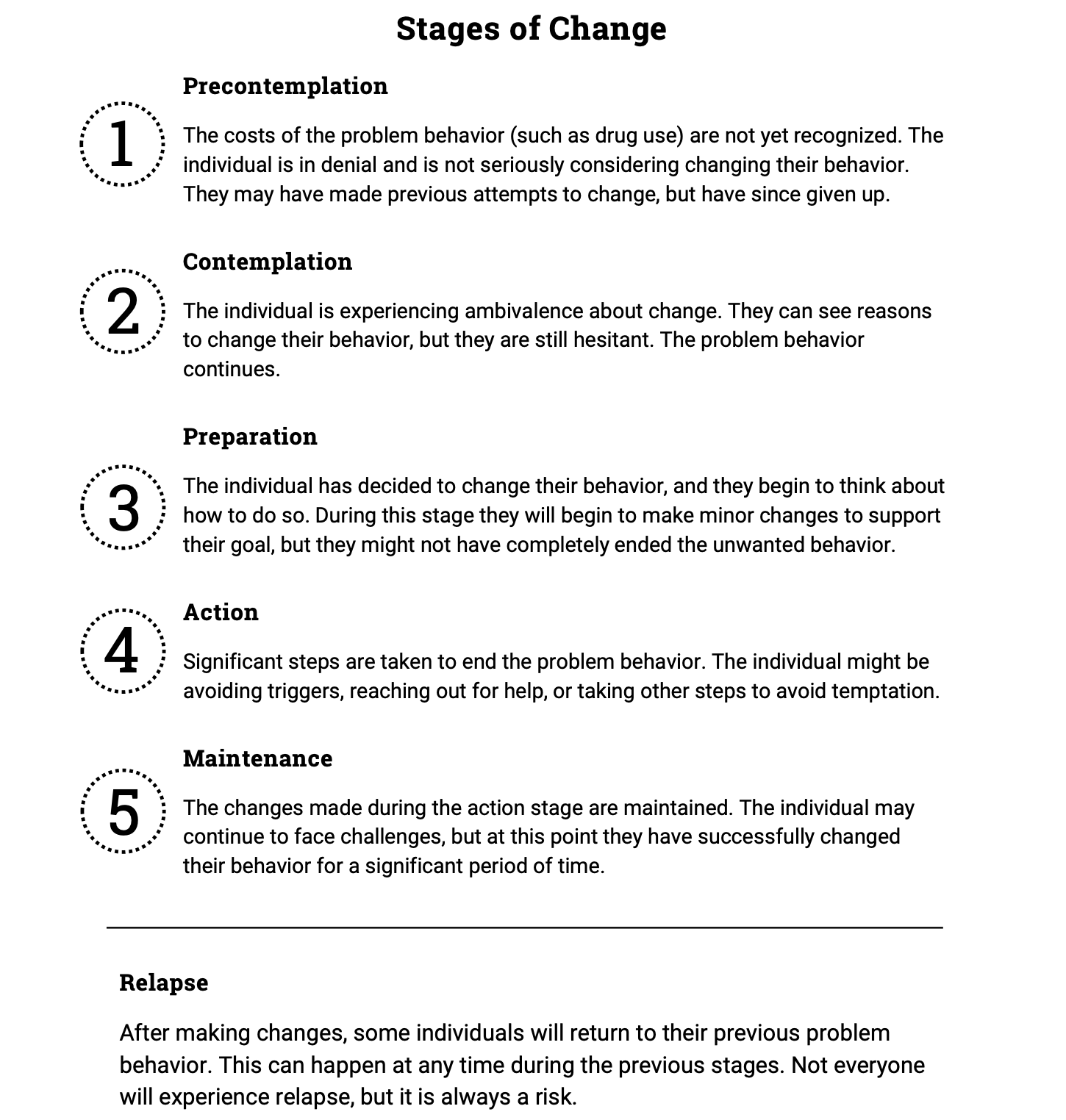
Stages of Change

Later in the afternoon we worked through a Change Plan Worksheet and had group discussion on the stages of change. 

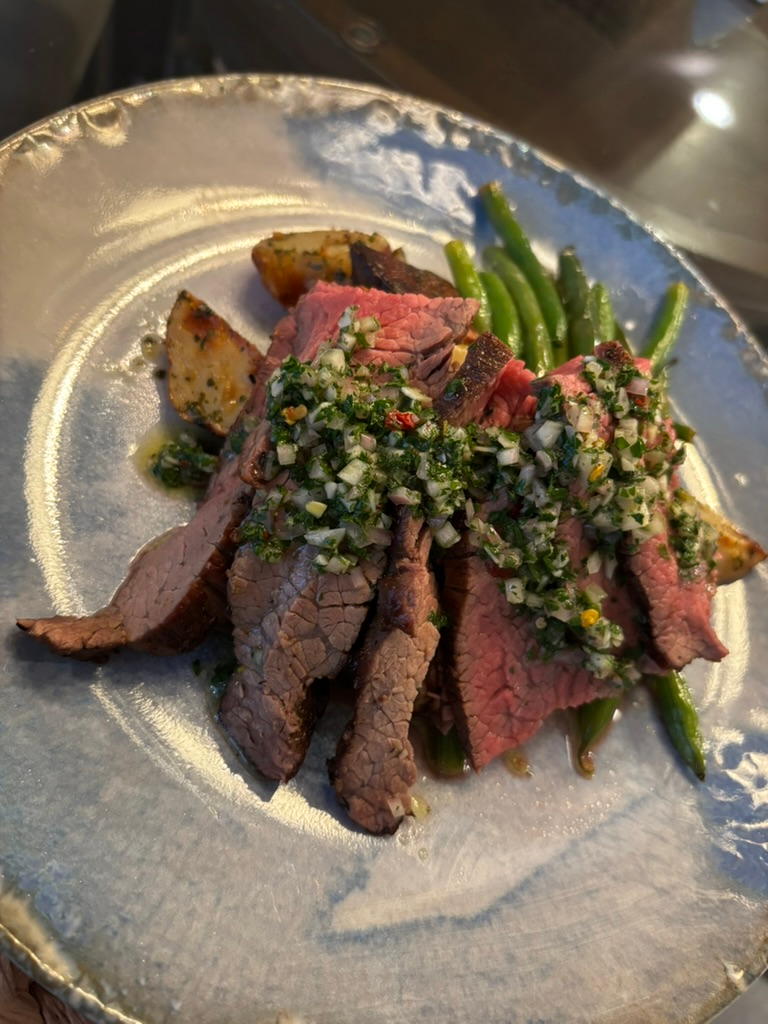
Steak Dinner!

Village Community Church AA Meeting

We ended the day with an AA meeting at the Village Community Church down the street from the house.  Tonight was also a book study meeting. Got to see some people that have already left the house.  

0 Comments